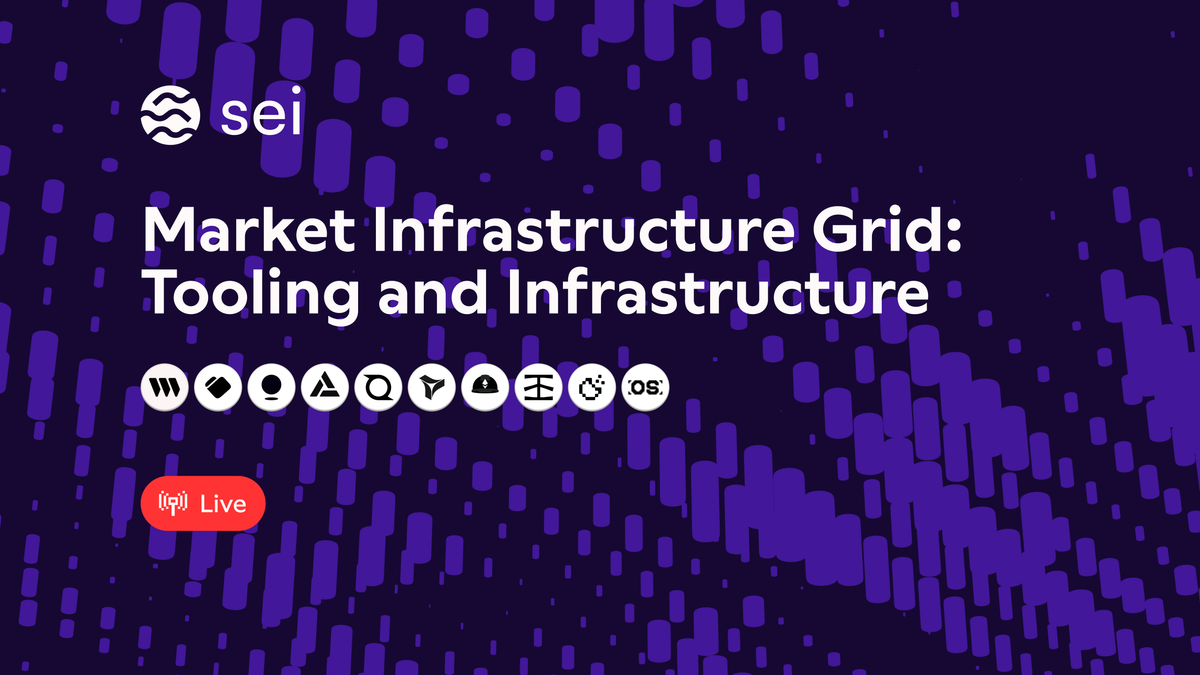
The Market Infrastructure Grid: Tooling and Infrastructure System
"The best code is no code at all." — Jeff Atwood
For years, building onchain meant writing it all yourself. Node infrastructure. Wallet authentication. Contract deployment. Debugging tools. Teams spent months solving problems that had nothing to do with their actual product.
That era is over. Now, teams can rely on infrastructure that's been standardized across leading EVM deployments, with years of fine-tuning—plugged into a high-performance Parallelized EVM built for next-generation finance.
That's the Tooling & Infrastructure System of the Market Infrastructure Grid: connectivity, onboarding, and development tools from proven providers across the EVM ecosystem and battle-tested by the largest applications in crypto, to the tune of $100B+ in annual transaction volume. 75M+ embedded wallets. 2M+ deployed contracts.
The hard problems have been solved. What matters now is what you build with them.
The Connectivity Layer: Cloud Infrastructure for Blockchain
You don't run your own email servers. You shouldn't need to run your own blockchain nodes either.
Alchemy, Infura & QuickNode provide node-as-a-service on Sei—handling the infrastructure required to read and write to the blockchain so developers don't have to. Alchemy processes over $100 billion in annual transaction volume and powers platforms like OpenSea, Worldcoin, and Shopify's blockchain integrations. Infura, live since 2016, serves over 400,000 developers and handles billions of daily requests—and is widely used as core infrastructure across major wallets and applications like MetaMask. QuickNode supports high-frequency applications across 60+ chains.
On Sei, established providers handle the infrastructure—so teams can focus on what real-time performance unlocks.
The Onboarding Layer: Eliminating the Wallet Wall
The biggest drop-off point in any Web3 application is the "Connect Wallet" button. Traditional crypto wallet onboarding loses 70-90% of users during setup. Embedded wallets can reduce drop-off to under 20%.
Embedded wallet providers like Privy & Dynamic enable users to sign in with email, phone, or social accounts, creating self-custodial wallets in the background. Privy powers over 75 million accounts across 1,500+ applications, with clients including Blackbird, Hyperliquid, and Jupiter. Dynamic has onboarded 40+ million users, powering wallet infrastructure for Stripe, Magic Eden, and Ondo Finance.
With embedded wallets on Sei, users authenticate, a wallet spins up, and their first transaction confirms before they've finished reading the welcome screen. A customer can interact with a trading interface, loyalty program, or payment system on Sei without needing to manually manage seed phrases or complex wallet setup, and without waiting.
The Development Layer: Velocity Without Fragility
"Move fast and break things" is a dangerous philosophy when handling financial assets. The development tools on Sei enables teams to move fast without breaking things—pre-built contracts, testing environments, and product debugging infrastructure that's already proven across the EVM ecosystem.
Thirdweb provides pre-built, audited contracts and SDKs for everything from token launches to marketplaces to AI agents. Over 2 million smart contracts deployed across leading EVM chains, powering applications for teams at Coinbase, Pixels, and Gala Games. What once required weeks of Solidity development now takes hours of implementation.
Hardhat enables compiling, testing, and validating smart contracts before real capital is at risk. On Sei, developers keep the same workflows and tooling they already use—paired with a high-performance execution layer.
Tenderly allows developers to simulate transactions before execution and debug smart contracts in real time. Used by teams at Uniswap, Aave, Yearn Finance, and Chainlink to catch errors before they hit production.
For developers, Sei offers the tooling of Ethereum with the performance of a Parallelized EVM. Teams can use frameworks that are established, deploy contracts that have already been audited across thousands of applications, and ship to an execution layer that can scale. The stack is familiar. The learning curve is lower. And the performance ceiling is higher.
The Frontier: The Agentic Economy
The Grid isn't just a map of tools for human users. It includes the next generation of market participants too: programmatic ones.
Enterprises already automate execution—treasury operations, portfolio rebalancing, compliance workflows. The theoretical next step is onchain agents that can read state, execute transactions, and respond to market conditions autonomously. These use cases require infrastructure that operates at the speed of inference.
On Sei, tools like ElizaOS enable autonomous agents to execute transactions, interact with smart contracts, and respond to onchain conditions without human intervention—at the speed of machines. Tools like Cookie.fun provide the analytics layer, tracking agent performance, transaction patterns, and activity metrics so teams can monitor and optimize automated workflows.
A treasury management workflow, for example, could look like this: an agent monitors reserve ratios, detects when rebalancing is needed, executes the swap, and logs the transaction—all within seconds. On slower chains, the lag between detection and execution introduces risk. On Sei, the agent, and the operations, work in real time.
What Matters Now
The same tools used to build the world's largest applications on Ethereum—Alchemy, Hardhat, Privy, Thirdweb, and more—are fully operational on Sei. Developers get the familiarity of proven frameworks with the performance of a Parallelized EVM.
For enterprises, the takeaway is simple: the tooling is standard, the integration lift is minimal, and the execution layer is ready.
The hard problems have been solved. What matters now is what you build with them.